A burglar alarm is only as good as the company that fits it. Two homes can have the same control panel and sensors, yet one gives years of reliable protection and the other gives false alarms, unanswered calls and an insurer who won’t pay out.
The difference is almost always the installer. So before you compare kit or prices, it pays to know how to choose a home alarm company you can trust. Here’s what to look for, the questions worth asking, and the red flags that should send you elsewhere.
Why the installer matters as much as the alarm
Most modern alarm panels are capable pieces of kit. What makes them work in your home is how they’re specified, positioned and set up.
A good home alarm company will survey your property first. They’ll look at entry points, how you use each room, whether you have pets, and where an intruder is most likely to try. A poorly placed sensor can leave a gap in your cover or trigger every time the heating kicks in.
Then there’s what happens after installation. Alarms need servicing, batteries need replacing, and sometimes things go wrong at 2am. The company you choose is the one you’ll be relying on for years, not just on fitting day.
Check their accreditation: what NSI Gold really means
Anyone can call themselves an alarm installer. There’s no law stopping them. That’s why independent accreditation is the single most useful thing to check.
The National Security Inspectorate (NSI) is one of the UK’s leading certification bodies for security companies. NSI-approved installers are regularly inspected to make sure their work meets British and European standards, and that the business itself is run properly.
NSI Gold is the higher of its two main tiers. On top of meeting the technical standards, a Gold company also holds a certified quality management system (ISO 9001). In plain terms, that means checks on how they work as well as what they install.
Why it matters to you:
- Police response. If you want a monitored alarm that can get a police response, it generally needs to be installed and maintained by a company certified by a UKAS-accredited body such as the NSI.
- Insurance. Many insurers ask for an NSI or similarly certified installer, particularly for higher-value homes or monitored systems. It’s worth checking your policy before you buy.
- Peace of mind. You’re not just taking the company’s word for it. Someone independent is checking their work.
You can confirm a company’s status on the NSI website’s company finder. It takes less than a minute.
Monitored or bells-only?
A good alarm company will help you choose the right level of response rather than selling you the most expensive option.
- Bells-only alarms sound a siren and flash a light when triggered. They’re a strong visual deterrent, but they rely on you or a neighbour reacting.
- Smart or app-connected alarms send an alert to your phone, so you can check what’s happening and decide what to do, wherever you are.
- Monitored alarms signal to a 24/7 monitoring centre. Trained staff check the alert and contact you, your keyholders or, where the system qualifies, the police.
If you’re often away, live alone, or have valuables that need protecting, monitoring is worth serious thought. Ask the company to explain who responds, how quickly, and what it costs each year.
Wired or wireless?
Both can protect your home well. The right choice depends on your property, not on what a salesperson prefers.
Wired systems are very reliable and need no sensor batteries, so they suit new builds or homes being renovated. Wireless systems are quicker to fit with far less disruption, which makes them popular in finished, decorated homes.
A trustworthy installer will explain the trade-offs and recommend what fits. If they only offer one type, ask why. For a closer look, read our guide to wired vs wireless burglar alarm systems.
7 questions to ask before you get a quote
- Are you NSI approved, and at what level? Then check it yourself online.
- Will you survey my home before quoting? A quote given over the phone, without seeing the property, is a guess.
- What grade of alarm are you recommending, and why? Most homes need a Grade 2 system, but the reasoning should be clear.
- Who owns the equipment? Some companies lock you into their own kit, so you can’t switch provider later.
- What does maintenance cost, and what’s included? Ask about annual servicing, call-outs and battery replacements.
- What happens when the alarm goes off? Get a clear answer on who is alerted and in what order.
- How long have you been trading? Experience isn’t everything, but you want a company that will still be around to service your system.
Red flags to watch out for
- Pressure to sign on the day. “This price is only valid today” is a sales tactic, not a security recommendation.
- No accreditation, or vague answers about it. If they can’t name the body that inspects them, assume no one does.
- Very long contracts with steep exit fees. Read the small print on monitoring and maintenance agreements.
- A quote without a survey. Every home is different, so a one-size-fits-all package rarely fits well.
- Hidden extras. Installation, monitoring, app access and servicing should all be clear up front.
- Few genuine reviews. Check Google reviews for comments about aftercare, not just installation day.
Choosing a home alarm company you can trust
The right home alarm company will take time to understand your home, be open about costs, and still be there years down the line when you need them.
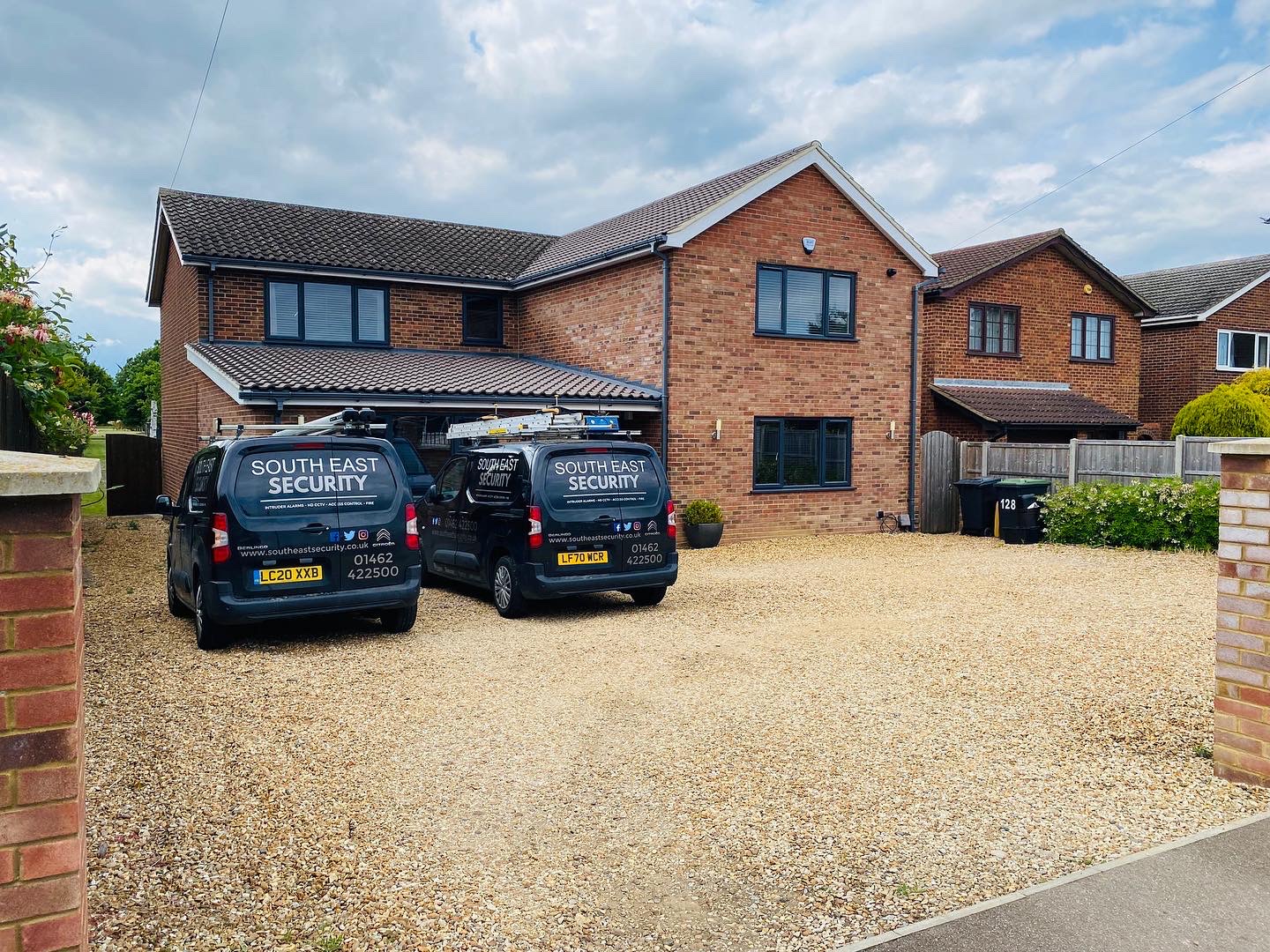
South East Security has been protecting homes across Hertfordshire, Cambridgeshire and the wider South East since 1983. We’re a family-run, NSI Gold approved company with offices in Hitchin and Cambridge, and our team is on hand 24/7, 365 days a year.
Thinking about a new alarm, or taking over an existing system? Book a free, no-obligation site survey or explore our burglar alarm installation service.
