
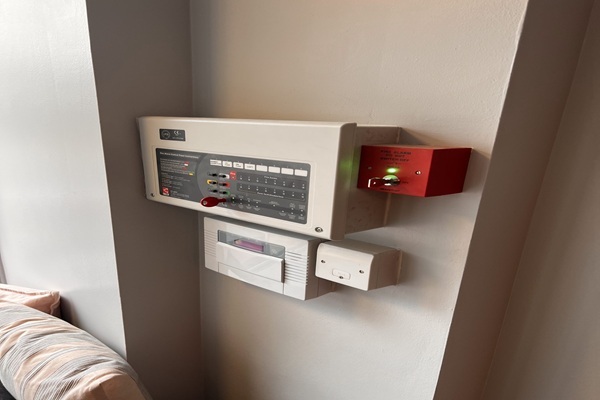
Fire safety is one of the most important responsibilities a business owner or manager has. In an office, shop, warehouse, school or any other commercial property, a suitable fire alarm system protects staff, customers and visitors, and it is a key part of meeting your legal obligations. Understanding the fire alarm requirements for commercial buildings in Bedfordshire is a sensible first step towards a safer workplace.
What the law requires
Commercial premises in England are covered by the Regulatory Reform (Fire Safety) Order 2005. It places duties on the “responsible person”, usually the employer, owner or whoever is in control of the premises.
The responsible person must carry out a suitable and sufficient fire risk assessment and put appropriate fire safety measures in place. That includes a suitable means of detecting a fire and warning people in the building. The law does not prescribe one type of alarm for every building. The fire risk assessment determines what level of detection and warning is needed.
Choosing the right system
A small single-storey office has very different needs from a large warehouse, a multi-storey building or a school. The system should reflect the risks identified in your fire risk assessment, including how the building is used, how many people are inside, whether anyone sleeps there and how quickly people can get out.
Systems are classified by category. Category M systems rely on manual call points only. Category L systems are designed to protect life, with L1 giving the most extensive coverage and L5 covering specific identified risks. Category P systems are designed to protect property. A competent installer will recommend the right category for your premises rather than simply fitting alarms in convenient places.
Understanding BS 5839
BS 5839-1 is the British Standard for the design, installation, commissioning and maintenance of fire detection and alarm systems in non-domestic premises. Following it helps make sure detectors, call points, control panels and sounders work together as they should, and it is widely used by fire risk assessors, insurers and fire authorities as the benchmark for a suitable system.
Smoke detectors, heat detectors and call points
Smoke detectors identify the early signs of a fire, while heat detectors respond to a rise in temperature. The right choice depends on the room. Kitchens, plant rooms and dusty areas often suit heat detection, as smoke detectors there can cause false alarms.
Commercial buildings also need manual call points, usually positioned on exit routes and at storey exits, so anyone discovering a fire can raise the alarm. Sounders, and visual beacons where needed, must alert everyone in the building, including people with hearing impairments.
Testing and maintenance
Installing a fire alarm is only the first step. BS 5839-1 recommends:
- a weekly test of the system, using a different manual call point each week
- servicing by a competent person at least every six months
- a logbook recording tests, faults, false alarms and maintenance.
Faulty detectors, damaged wiring, failing standby batteries and neglected equipment all affect performance, and routine servicing finds them before they compromise safety. Keeping records also helps show that you are meeting your responsibilities if the fire authority or your insurer asks.
When to review your fire alarm
Review your system whenever the premises change: after a refurbishment, a change of layout, an increase in occupancy or a change in how rooms are used. An existing system should also be reassessed if it develops recurring faults or false alarms. Your fire risk assessment should be reviewed regularly as well, and the alarm should match its findings.
Common mistakes we see
The issues we come across most often are systems that have not been updated after an office refit, weekly tests that have quietly stopped, logbooks left blank, and smoke detectors in kitchens causing repeated false alarms. Each one is straightforward to fix.
Fire alarms from South East Security
South East Security has been a family-run fire and security provider since 1983, with more than 40 years of experience serving domestic and commercial customers. Our fire alarm services across Bedfordshire include system design, professional installation and ongoing maintenance for businesses, schools and public-sector premises. Contact us to discuss your commercial fire alarm requirements and arrange a premises assessment.
